


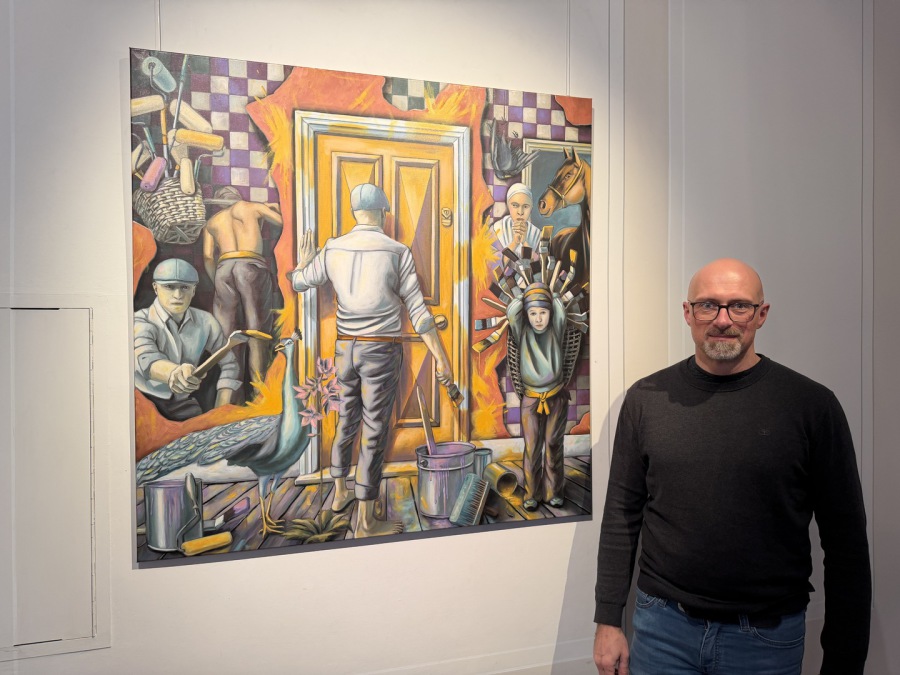
Everything Is a Matter of Perspective: Andreas Heindl’s Scenic Spaces Appear Like Stage Sets of an
Inner Drama. Photo: Art-Agency Hammond
room for humour
HOME
Renate Hammond is the founder of room for humour, a visual arts project specialising in the representation of humour in contemporary art.
P A S T E X H I B I T I O N
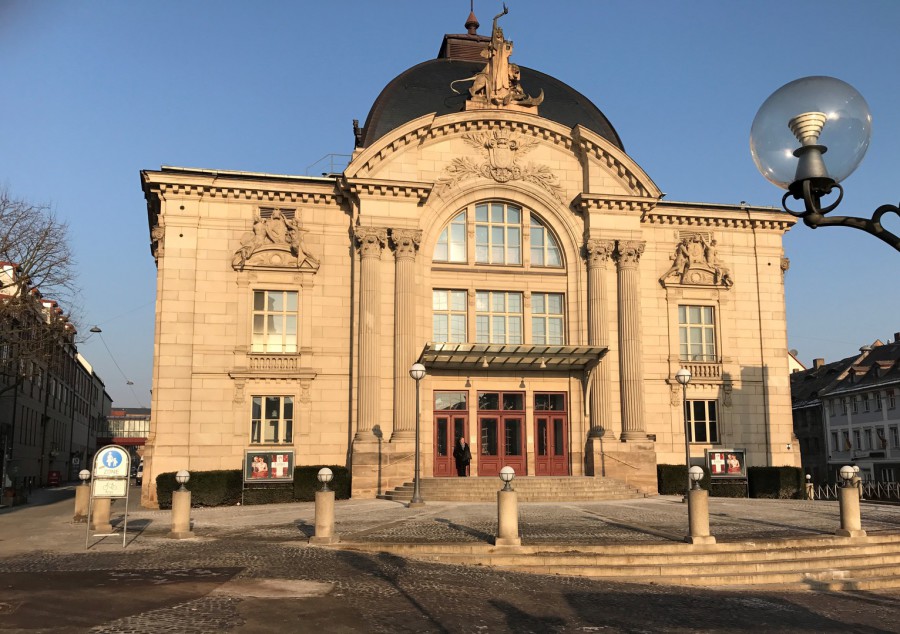 Stadttheater Fürth, built by the architects Fellner and Helmer 1901/1902. © John Hammond
Andreas Heindl & Kurt Neubauer
SCHNITTSTELLEN
INTERFACES
Stadttheater Fürth
Königstraße 116, 90762 Fürth, Germany
18.01. - 10.03.2026
SCHNITTSTELLEN
INTERFACES
Mark moments where different systems interact and facilitate exchange. The artist engages in a dialogue with their work, which in turn communicates with the viewer. Only through this exchange does it unfold its impact and open up new realms of meaning. Where are the interfaces between the works of Andreas Heindl and Kurt Neubauer? Experience the encounter of two realist painters.
Opening: Sunday, January 18, 2026 at 11:00 a.m. at the Fürth City Theater, Königstraße 116, 90762 Fürth, Tel.: +49 911 974 24 10
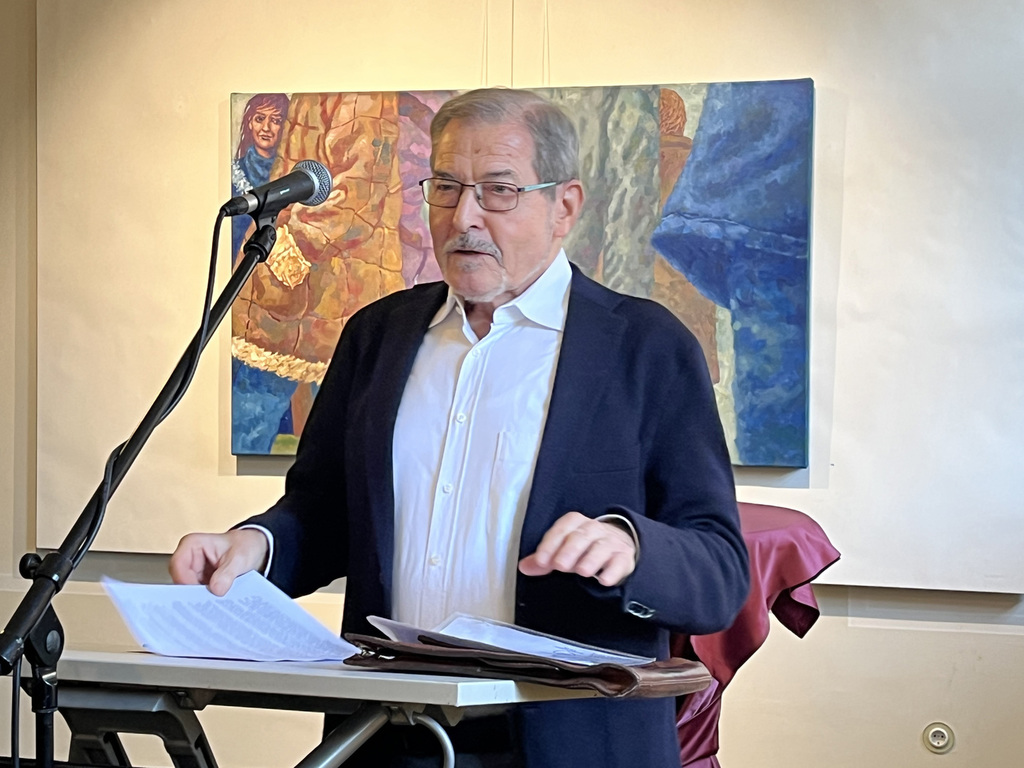
Introduction: Hans-Peter Weigel, radio author, pastor and artist (emeritus) Exhibition dates: January 18 to March 10, 2026
The exhibition can be viewed between 60 and 30 minutes before the start of a performance or at another time by appointment with Art-Agency Hammond Tel.: +49 911 77 07 27 Email: aah@art-agency-hammond.de www.art-agency-hammond.de
Artworks
Andreas Heindl
Artist Profile
Andreas Heindl
Geboren 1974 in Thalmässing, lebt und arbeitet in Mittelfranken.
Seit den 2000er-Jahren intensive Beschäftigung mit Malerei, zahlreiche Ausstellungen u. a. in Nürnberg, Fürth, München und auf Burg Abenberg.
Heindls Werke zeigen Spuren und Schichten menschlicher Erfahrung.
Wie szenische Räume entfalten sie sich als Bühnenbilder eines inneren Geschehens – leise, intensiv, vieldeutig. Ein Dialog zwischen Nähe, Distanz und Erinnerung.
Die Werke sind von surrealistischen Motiven geprägt – der Mensch und seine Zukunft im Mittelpunkt. In kraftvollen, symbolgeladenen Bildern reflektiert er gesellschaftliche Entwicklungen, Fragen der Verantwortung und der Sehnsucht nach einer besseren Welt. Seine jüngsten Werkserien „Kinder der Freiheit“ und „Kultur der Destruktion“ zeigen seine präzise Technik und tiefe emotionale Ausdruckskraft.
Artist Profile
Geboren 1966 in Nürnberg, wo er auch lebt und arbeitet.
Von 1994 bis 2000 studierte er an der Akademie der Bildenden Künste Nürnberg bei Professor Johannes Grützke (2000 Meisterschüler).
1996 eröffnete er sein Grafikatelier in Nürnberg und arbeitet seitdem als freischaffender Maler und Grafiker.
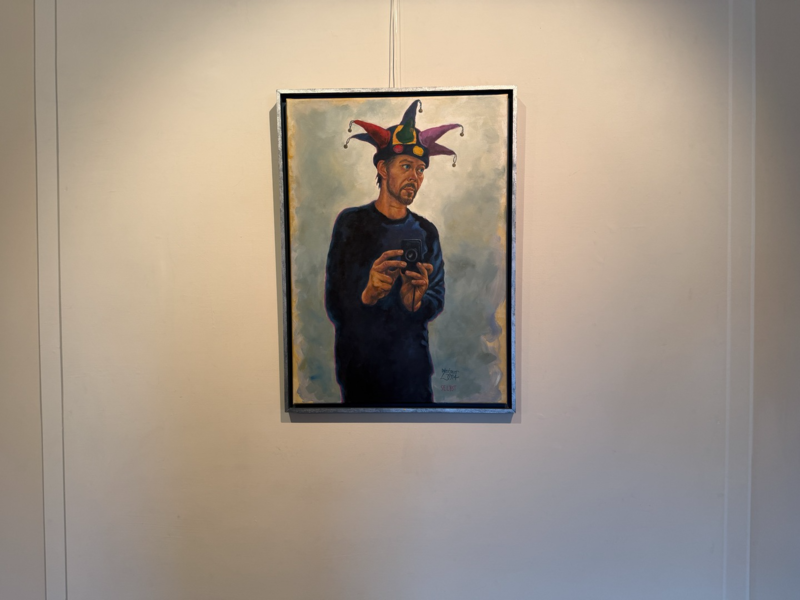
Der zeitgenössische Impressionist malt bevorzugt „pleinair“ – direkt im Freien. In seinen Bildern fängt er Lichtsituationen und städtische Szenen mit atmosphärischer Dichte ein. Statt romantischer Müßiggänger zeigt Neubauer Menschen im modernen Alltag – beim Arbeiten, Einkaufen, Unterwegssein. Mit klaren Kompositionen und feinem Gespür für Farbklänge verwandelt er urbane Momente in poetische Impressionen – ein Meister moderner, unprätentiöser Romantik.
Arne Stahls Werke vereinen eine klare Formensprache mit expressiver Dynamik und eröffnen dabei neue, überraschende Perspektiven auf das Alltägliche.
Erleben Sie einen inspirierenden Dialog von Farbe und Form – und lassen Sie sich von der kreativen Spannung zwischen zwei individuellen künstlerischen Handschriften begeistern.
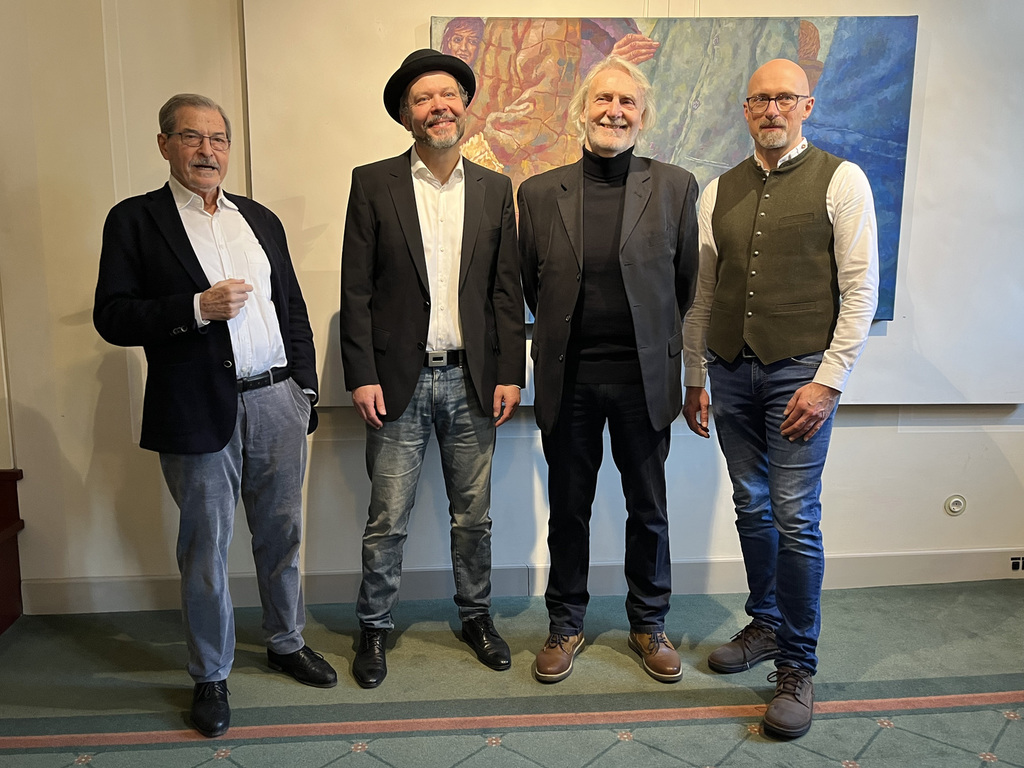
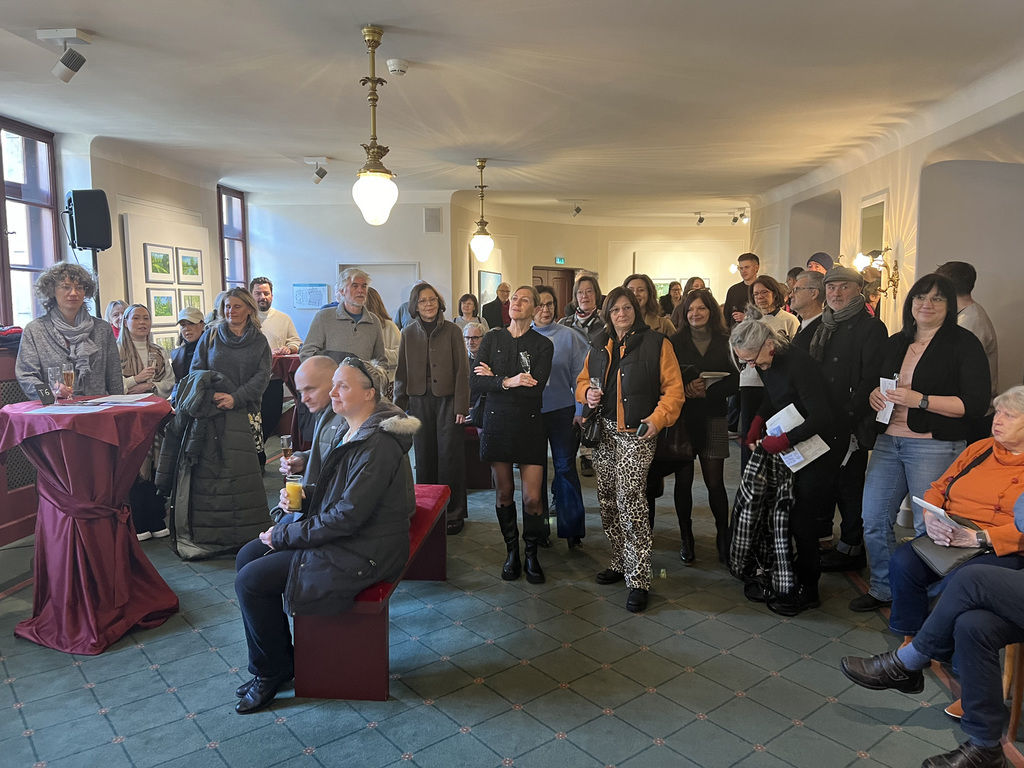
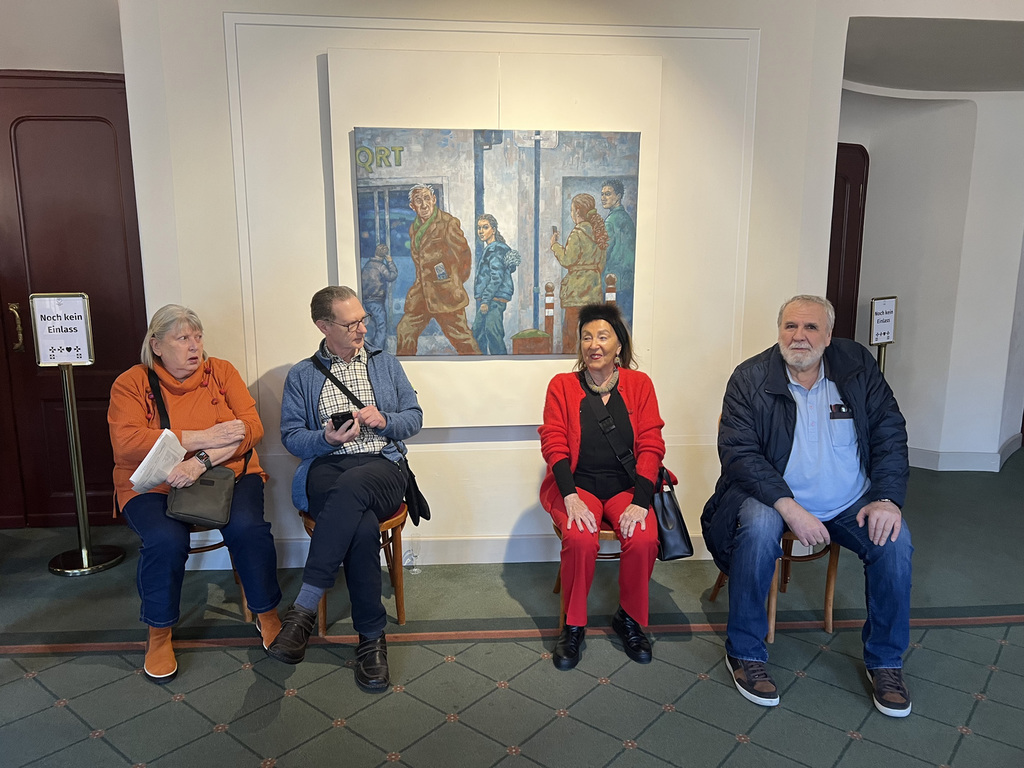
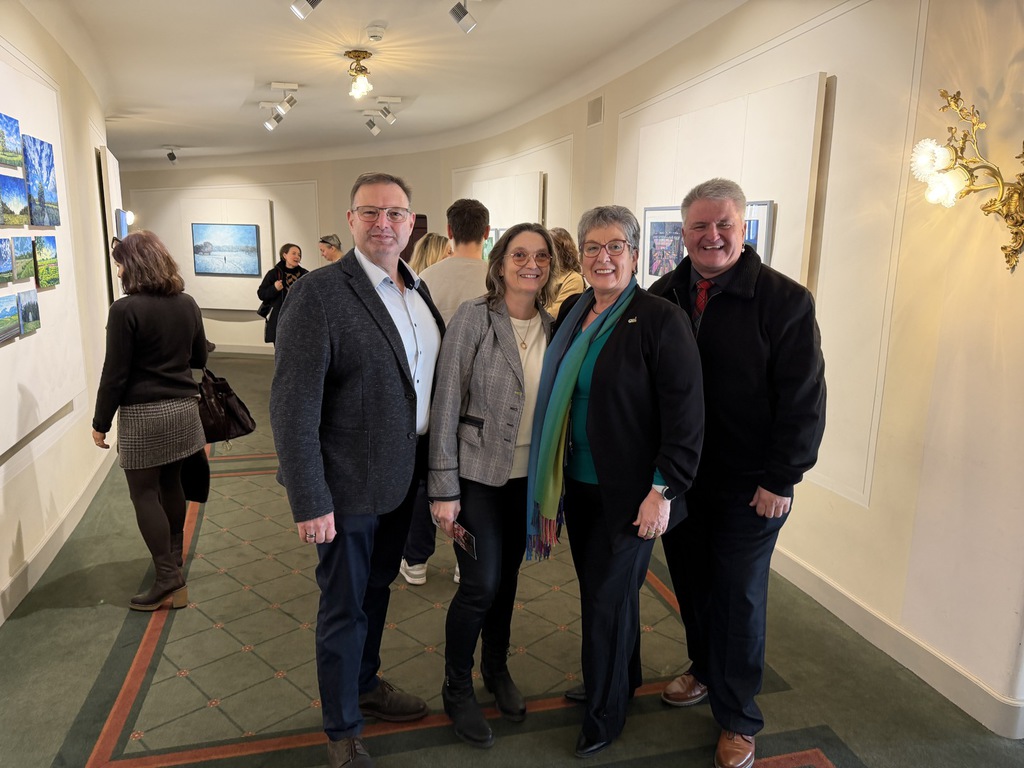
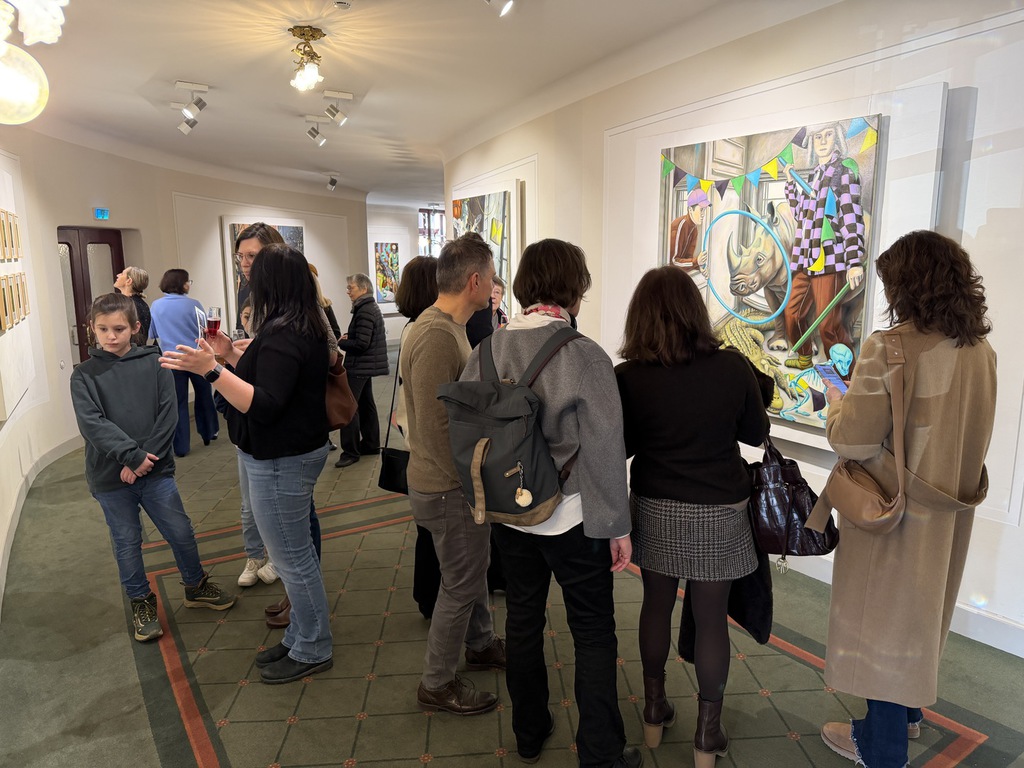
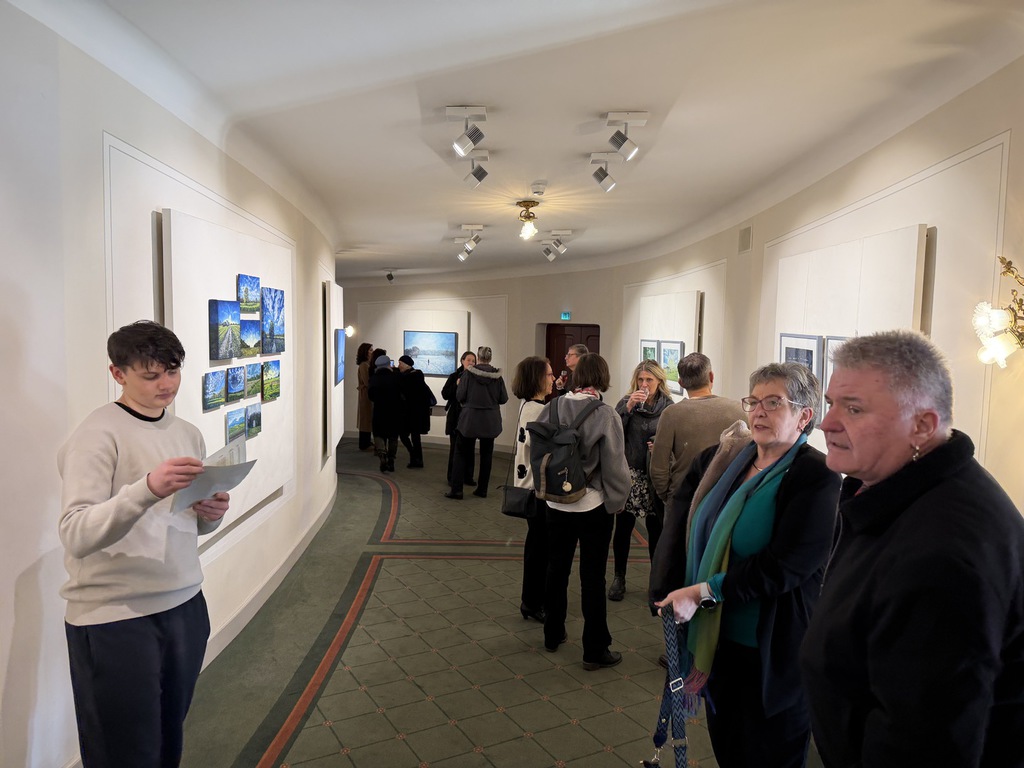
Vernissage: 18.01.2026
Press
Fürther Nachrichten, 19.02.2026, REINHARD KALB
How the World Comes Unhinged
Kurt Neubauer and Andreas Heindl search for “interfaces.” It pays to take a closer look.
FÜRTH – Once again, two painters are presenting their work in the foyer of the city theatre. “Interfaces” is the title of the current exhibition organized by John Hammond’s Art-Agency. There are not many obvious points of contact between the two artists. Rather, the viewer searches for the interfaces within their own perception of reality.
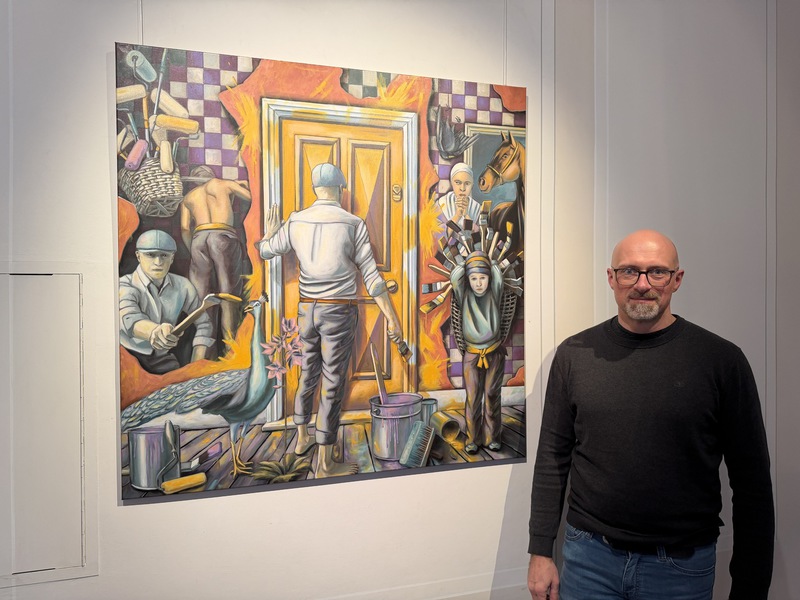
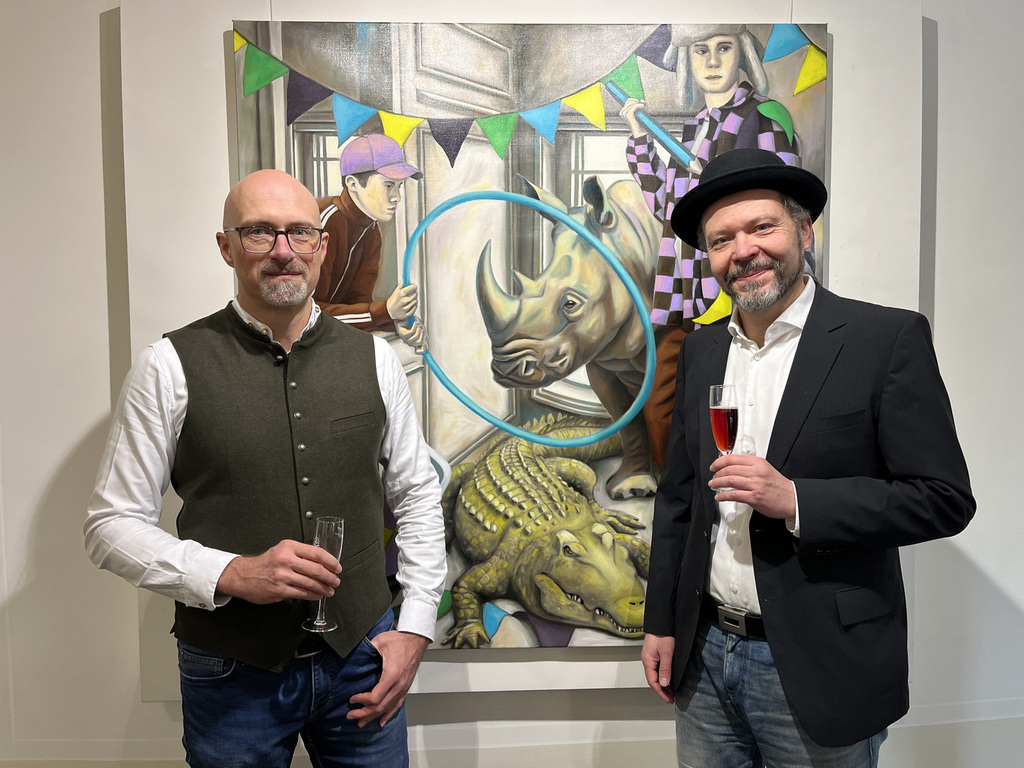
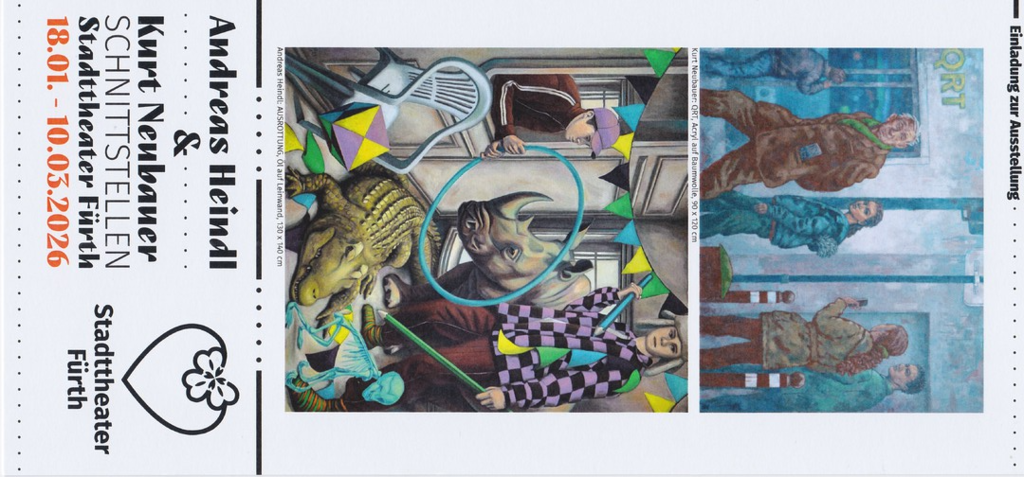
Andreas Heindl’s pictorial worlds consist mainly of interiors. The salons are crowded with armchairs, sofas, instruments, teddy bears, books, and houseplants. Instead of being absorbed in a good book, the occupant prefers to immerse himself in his smartphone. Two irritating elements appear as well—things one cannot quite identify at first glance. Then the penny drops. Occasionally a child is sitting, or a piece of furniture stands, where it cannot possibly be: directly on the wall or on the ceiling, as if we were visiting M. C. Escher. At times the perspective itself also shifts.
The inhabitants dream of breaking free. One boy has built himself a hot-air balloon; the basket is made from a cardboard box. Everything is ready for takeoff. The only question is: where should the balloon drift away to? Another painting refers directly to the arts. In front of a concert grand piano stands a lady in veils, cradling a white, naked statue in her arms. Four other statues keep her company. Do they symbolically represent music? In the mind’s ear, the delicate chords of a nocturne by Chopin seem to fade away.
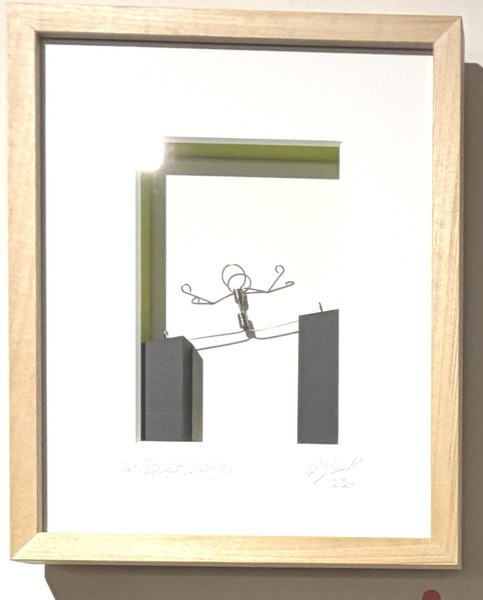
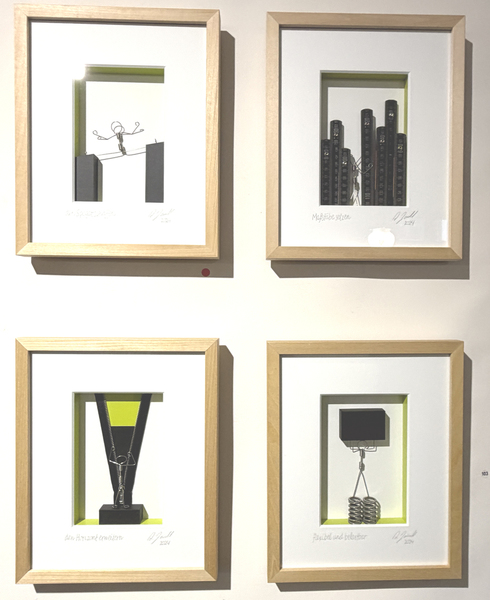
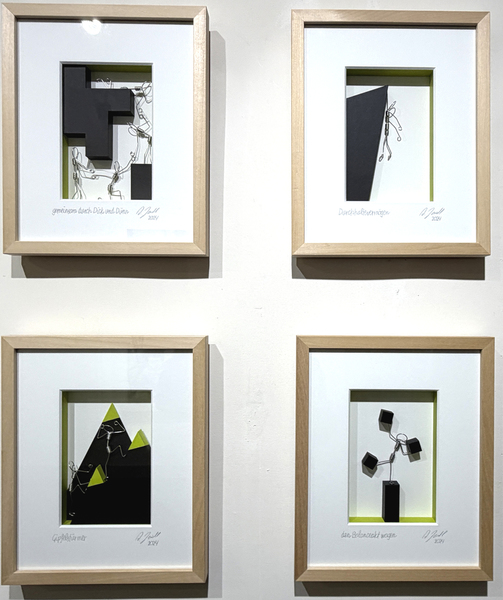
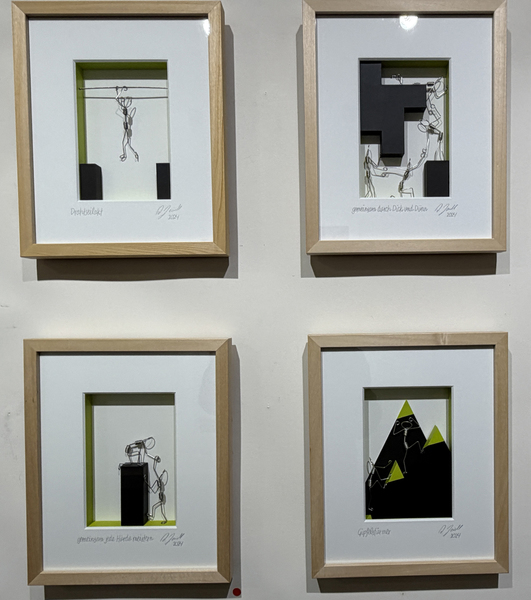
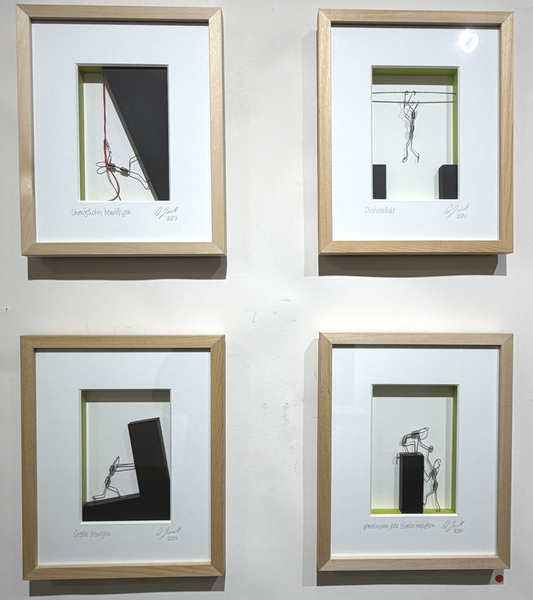
Heindl, who comes from Thalmässing and was nominated for the NN Art Prize in 2020, avoids garish colors; everything appears in soft pastels, and the contours of bodies and objects blend gently into their surroundings. Besides painting, he also works as a sculptor. In two series of images, framed and mounted behind glass, he presents a little figure made of bent wires moving through a world of white emptiness and black blocks. It climbs a rope, swings across abysses, hauls itself up over overhangs, and performs a split above a chasm. The viewer is reminded of the myth of Sisyphus, eternally rolling his stone uphill. Here, however, the heavy matter is handled playfully. We are allowed to imagine Sisyphus as a happy person.
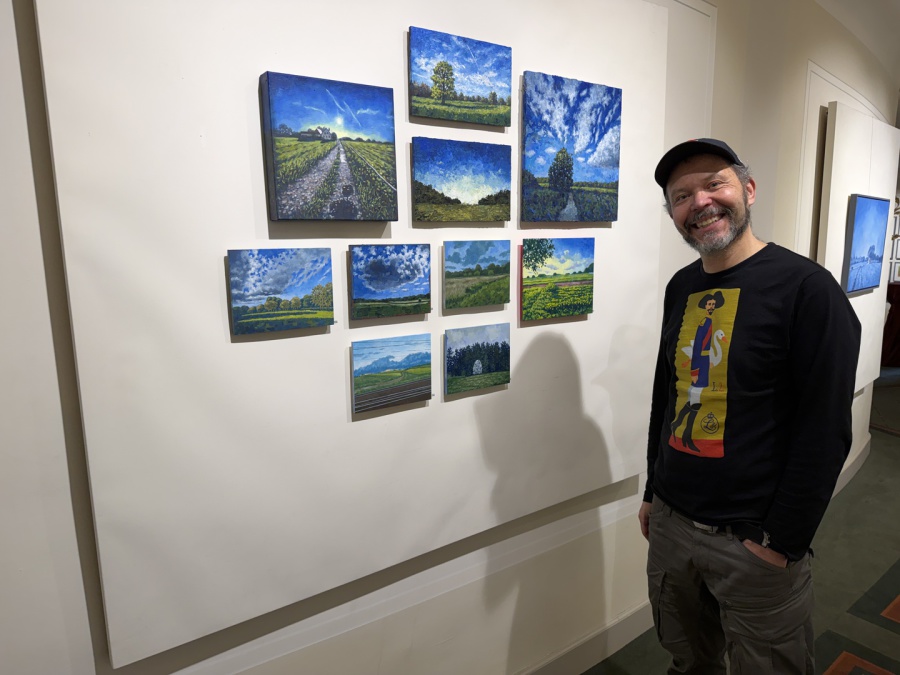
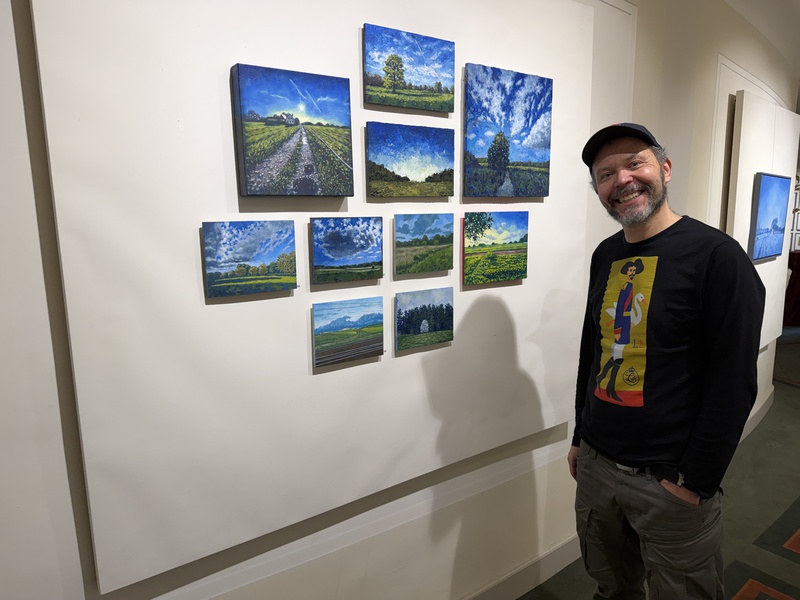
Kurt Neubauer’s plein air works appear charming only at first glance.
Photo: Art-Agency Hammond
Kurt Neubauer’s pictorial worlds are more accessible, yet no less mysterious. At first glance they are small-format landscapes that may warm the viewer’s heart. But soon questions arise. Where are the people? Garden beds and paths indicate cultivated landscapes; the colors consistently correspond to nature, yet everything appears so cold. One has the impression that it has just rained, as if nature had cleansed itself of human presence.
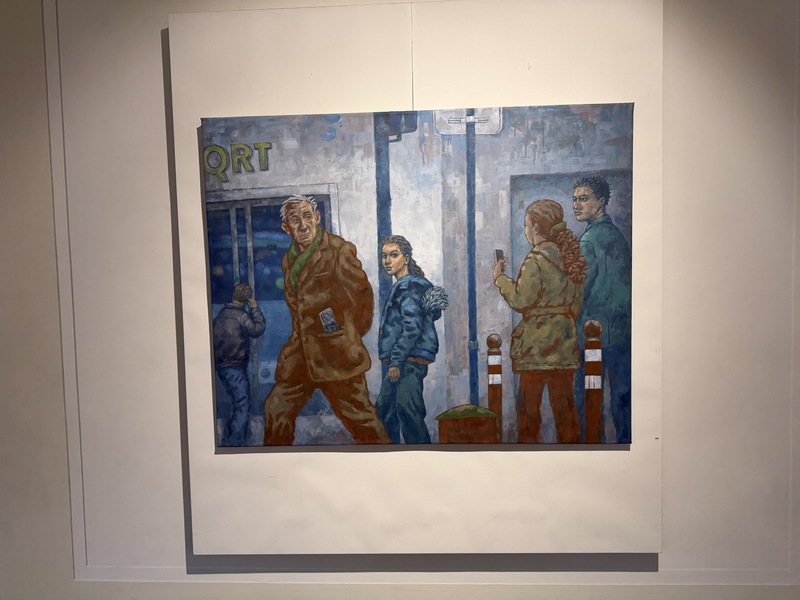
Some paintings, however, do show signs of human dominance. For example, a swimming pool that pushes deep into the picture as a long rectangle. Or trees marked with a painted cross, as if they were destined to be felled. In contrast, there are two large-format works depicting urban scenes. Adults in thick coats and carrying shopping bags hurry along; no more than a passing glance is exchanged. Only on the third look does the unusual aspect of these works become apparent. The viewpoint is set at hip height, meaning the world is seen through the eyes of a six-year-old child. And then adults wonder why their children think they are foolish.
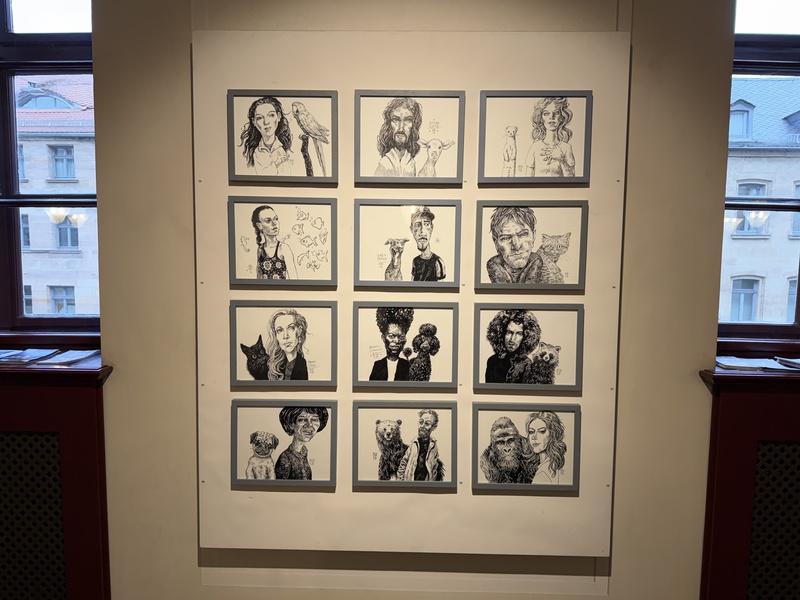
Yet Kurt Neubauer—who runs a successful graphic studio in Nuremberg, though he comes from Forchheim—also shows a sense of humour. In a series of twelve ink drawings, he presents humans and animals as “comrades.” A long-haired Jesus-like figure is
accompanied by a lamb; an ermine stretches itself beside a lady with bunny-like teeth; a poodle competes with its owner’s afro hairstyle; a woman hangs out with a gorilla; a girl in a swimsuit seems to be pursued by fish; and a lady holds a conversation with a parrot. But the question remains: who is really mimicking whom here?
Invitation
H A M M O N D A R T C O L L E C T I O N
 Druckversion